
Blog
Massage Office Chair: Is It Worth It? Here’s Everything You Need to Know Before Buying One

You sit down at your desk at 9 AM with a fresh cup of coffee and a long to-do list. By lunchtime, your shoulders feel tight. By 4 PM, your lower back starts complaining. When the workday finally ends, all you want is a place to stretch out and relax.
Sound familiar?
You’re not alone.
Most professionals spend between 7 and 10 hours sitting every day. Whether you’re working in a corporate office, running your own business, attending online meetings, or working remotely, your chair has a bigger impact on your health than you might think.
Many people blame long working hours for their discomfort, but often the real culprit is the chair they’re sitting on.
A poorly designed office chair forces your spine into an unnatural position. Your shoulders roll forward, your neck strains toward the monitor, and your lower back loses the support it needs. Day after day, these small habits build into bigger problems—back pain, stiff muscles, poor posture, and reduced energy.
That’s exactly why more professionals are switching to a Massage Office Chair.
It’s not simply about adding a massage feature to an office chair. It’s about creating a workspace that supports your body while you work. The right chair helps you stay comfortable during long hours, encourages better posture, and gives tired muscles a chance to relax without interrupting your day.
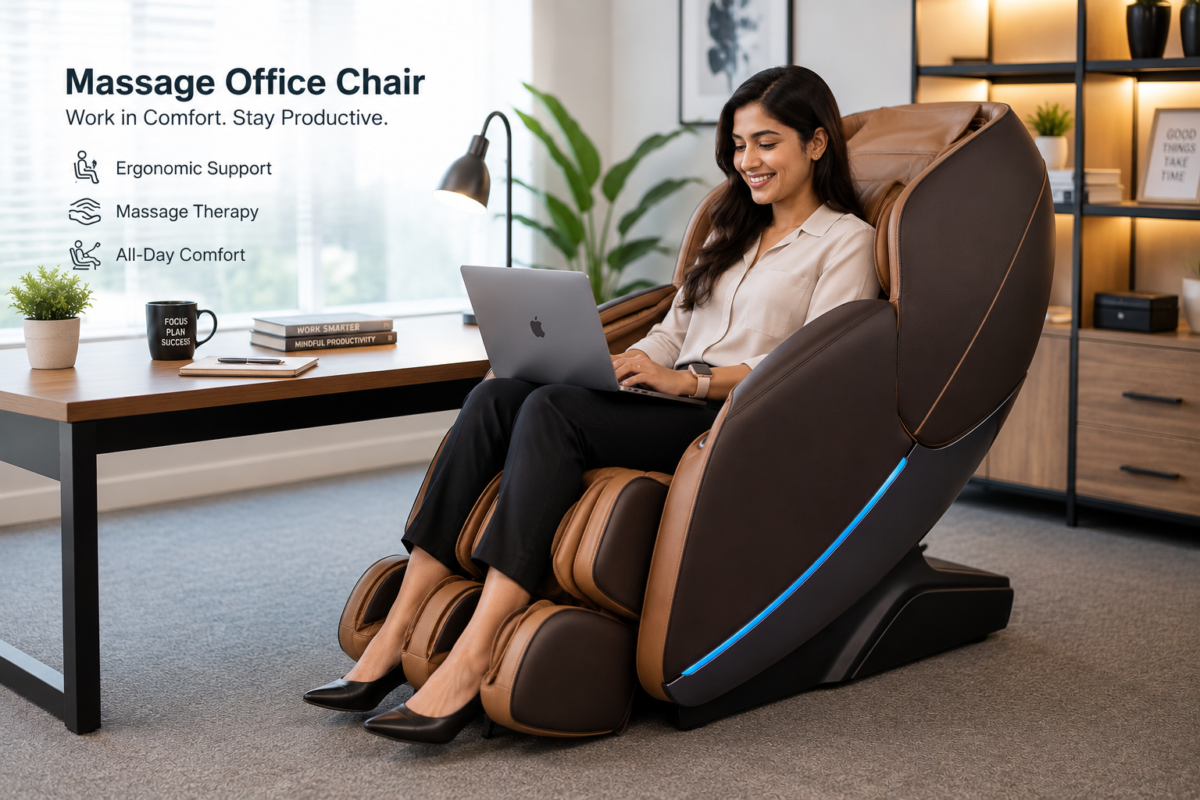
In this guide, we’ll explore how massage office chairs work, who should buy one, the features that actually matter, and how to choose a chair that delivers lasting comfort instead of short-term excitement.
Why Your Office Chair Deserves More Attention
Think about the devices you use every day.
You probably spent time choosing the right laptop, smartphone, or monitor. You compared specifications, read reviews, and made sure you were getting good value for your money.
But when it comes to office chairs, many people simply buy the first one that looks comfortable.
That decision can affect your health every single day.
Unlike your keyboard or monitor, your chair supports nearly your entire body. If it doesn’t provide the right support, your muscles work harder just to keep you sitting upright.
Over time, that extra strain begins to show.
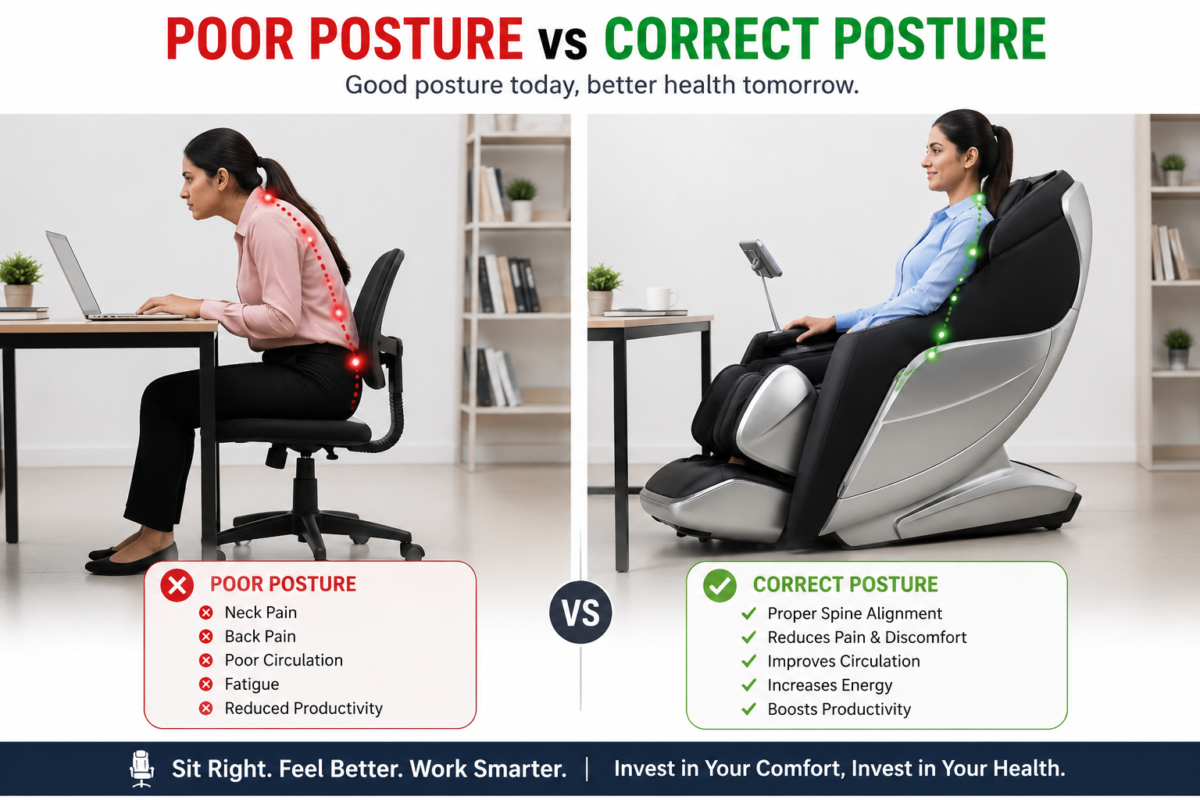
You may notice:
- Your lower back aches after work.
- Your shoulders feel tight after meetings.
- Your neck feels stiff by evening.
- You constantly shift positions trying to get comfortable.
- You lose focus because you’re distracted by discomfort.
These aren’t just signs of a busy workday—they’re often signs that your chair isn’t supporting your body properly.
The Hidden Cost of Sitting All Day
Most people know that sitting too much isn’t ideal, but few realise how quickly it affects the body.
When you remain in the same position for hours:
- Blood circulation slows down.
- Hip muscles become tight.
- The lower back absorbs continuous pressure.
- Neck muscles work overtime supporting your head.
- Shoulders begin to round forward.
- Core muscles become less active.
The result?
Even if you haven’t lifted anything heavy, your body feels exhausted.
Research has consistently shown that prolonged sitting is linked to poor posture, muscle fatigue, and reduced physical activity. While no chair can replace regular exercise, choosing ergonomic seating can significantly reduce the stress placed on your body during working hours.
That’s where ergonomic design makes a noticeable difference.
What Makes a Massage Office Chair Different?
At first glance, it may look like a premium executive chair.
The difference becomes clear once you sit in it.
A Massage Office Chair combines ergonomic engineering with built-in massage technology, creating a seating experience designed for people who spend long hours at a desk.
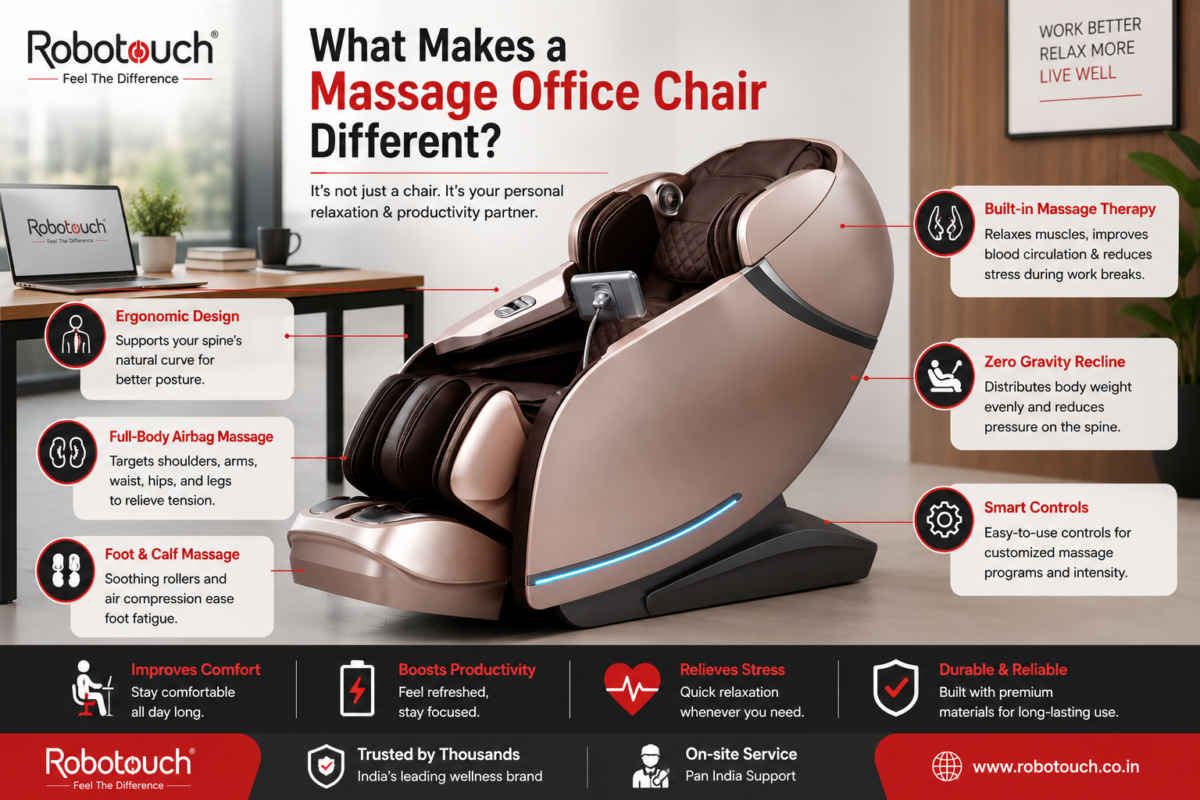
Instead of simply giving you a place to sit, it actively helps reduce muscle tension while supporting healthy posture.
Most quality models include features such as:
Ergonomic Lumbar Support
Your lower back naturally curves inward.
A good office chair supports that curve instead of flattening it. Proper lumbar support helps reduce strain on the spine and encourages a healthier sitting posture throughout the day.
Adjustable Reclining Positions
No one should remain in exactly the same position for eight hours.
Being able to recline slightly between meetings or while reading documents helps reduce pressure on your spine and improves comfort.
Built-in Massage Function
This is the feature that attracts most buyers, but it’s often misunderstood.
Office massage chairs don’t try to replace a professional massage.
Instead, they provide gentle vibration massage designed to relax muscles that become tight during long periods of sitting.
Even ten minutes of massage during a break can leave your back feeling noticeably lighter.
Premium Cushioning
Comfort isn’t only about softness.
Good cushioning distributes your body weight evenly, preventing pressure points that develop after sitting for several hours.
High-density foam maintains its shape much longer than ordinary cushioning, making it a worthwhile investment.
Who Can Benefit the Most?
One of the biggest misconceptions is that massage office chairs are only meant for CEOs or luxury offices.
In reality, they’re useful for anyone who spends significant time sitting.
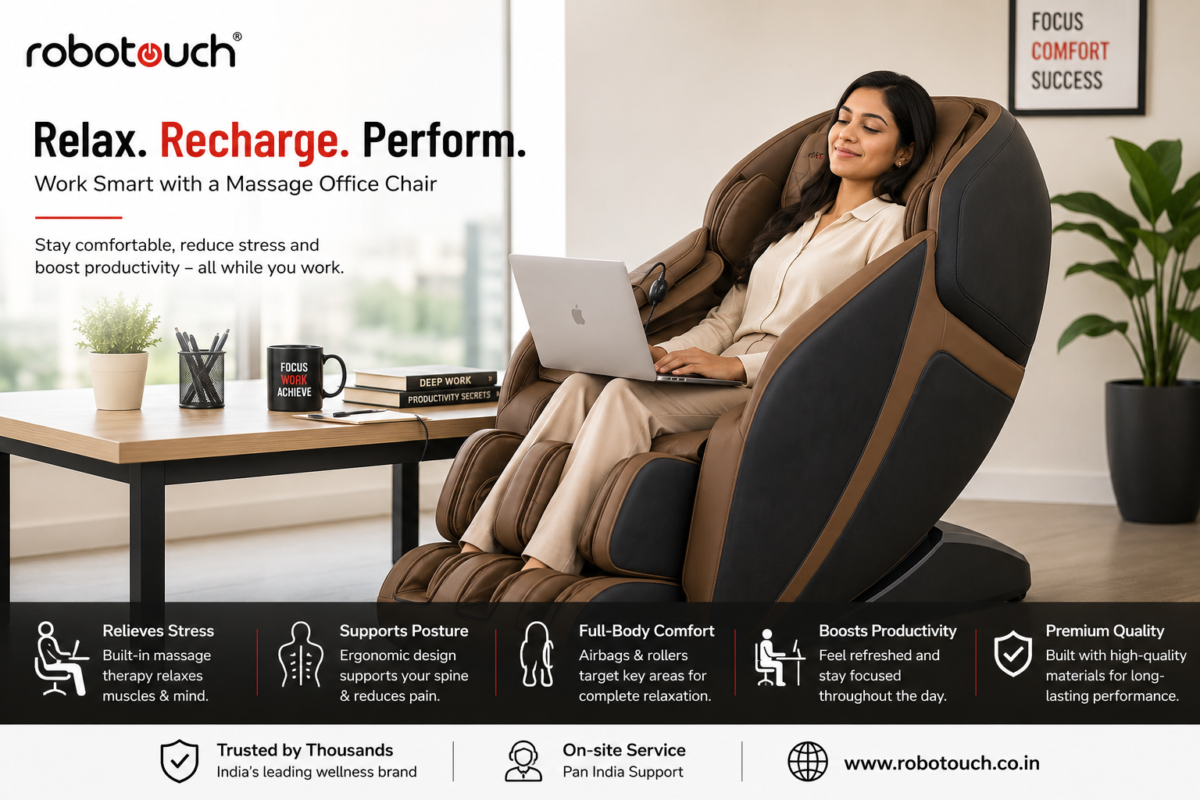
For example:
Professionals
From accountants and software developers to customer support executives and architects, professionals often spend their entire workday in front of a computer.
A supportive chair helps reduce fatigue and keeps them focused on their work instead of constantly adjusting their seating position.
Remote Workers
Working from home has many advantages, but home office setups are often overlooked.
Many people still work from dining chairs or inexpensive office chairs that weren’t designed for prolonged use.
Upgrading your seating can dramatically improve your work-from-home experience.
Students
Preparing for competitive exams, attending online classes, or studying late into the evening often means sitting for extended periods.
Proper back support becomes increasingly important during these years.
Business Owners
Running a business means spending hours in meetings, reviewing reports, replying to emails, and making important decisions.
Comfort shouldn’t become another distraction during an already busy schedule.
It’s Not Just About Comfort—It’s About Productivity
Think about your most productive workday.
Were you constantly adjusting your chair?
Probably not.
When you’re physically comfortable, your attention stays on the task instead of your back.
That’s one reason many companies now invest in ergonomic office furniture for their employees. Comfortable teams generally experience fewer interruptions caused by physical discomfort, allowing them to work more efficiently throughout the day.
A comfortable chair won’t finish your work for you—but it can remove one of the biggest obstacles standing in your way.
Before You Buy, Ask Yourself These 5 Questions
Buying an office chair isn’t something most people do every year. A quality chair is an investment you’ll use almost every working day for the next five to ten years. That’s why it’s worth slowing down and asking a few simple questions before you click “Buy Now.”
1. How Many Hours Do You Sit Each Day?
This is the most important question.
If you’re sitting for just two or three hours a day, a basic ergonomic chair might be enough. But if your work keeps you at a desk for eight hours or more, your body needs much better support.
Think about your daily routine.
Do you spend hours replying to emails, attending Zoom meetings, coding, editing videos, designing graphics, or managing spreadsheets?
If yes, your chair isn’t just furniture—it’s part of your work equipment.
The more time you spend sitting, the more important it becomes to choose a chair that supports your posture instead of working against it.
2. What’s Actually Causing Your Discomfort?
Not everyone experiences the same kind of pain.
Some people complain about their lower back.
Others struggle with stiff shoulders, neck pain, or numb legs after sitting for long periods.
Understanding where your discomfort begins makes it easier to choose the right features.
For example:
- Lower back pain? Prioritise adjustable lumbar support.
- Tight shoulders? Look for adjustable armrests.
- Neck stiffness? A height-adjustable headrest is worth having.
- Feeling restless after sitting? A reclining backrest and massage function can help you change positions throughout the day.
Buying the right chair isn’t about getting every feature available—it’s about getting the features your body actually needs.
3. Will the Chair Fit Your Workspace?
This is something many buyers forget.
That large executive chair might look impressive online, but will it fit comfortably under your desk?
Before purchasing, measure your workspace.
Check:
- Desk height
- Available floor space
- Chair width
- Reclining clearance
- Armrest height
A chair that fits your workspace properly creates a much more comfortable working environment.
4. Can You Adjust It to Fit Your Body?
Your chair should adjust to you—not the other way around.
People come in different heights, body types, and working styles. That’s why adjustability matters.
Look for features such as:
- Adjustable seat height
- Reclining backrest
- Adjustable lumbar support
- Height-adjustable armrests
- Adjustable headrest
The more personalised the fit, the better your posture will be throughout the day.
5. Will It Still Be Comfortable After Three Years?
A chair may feel comfortable in the first week.
The real question is how it performs after years of daily use.
Quality materials make a noticeable difference.
High-density foam maintains its shape longer.
Strong steel frames provide better stability.
Durable caster wheels roll smoothly without wearing out quickly.
Sometimes spending a little more upfront saves you from replacing the chair much sooner.
Features That Actually Matter (And Those That Don’t)
When comparing office chairs online, it’s easy to become distracted by long feature lists.
Some features genuinely improve comfort.
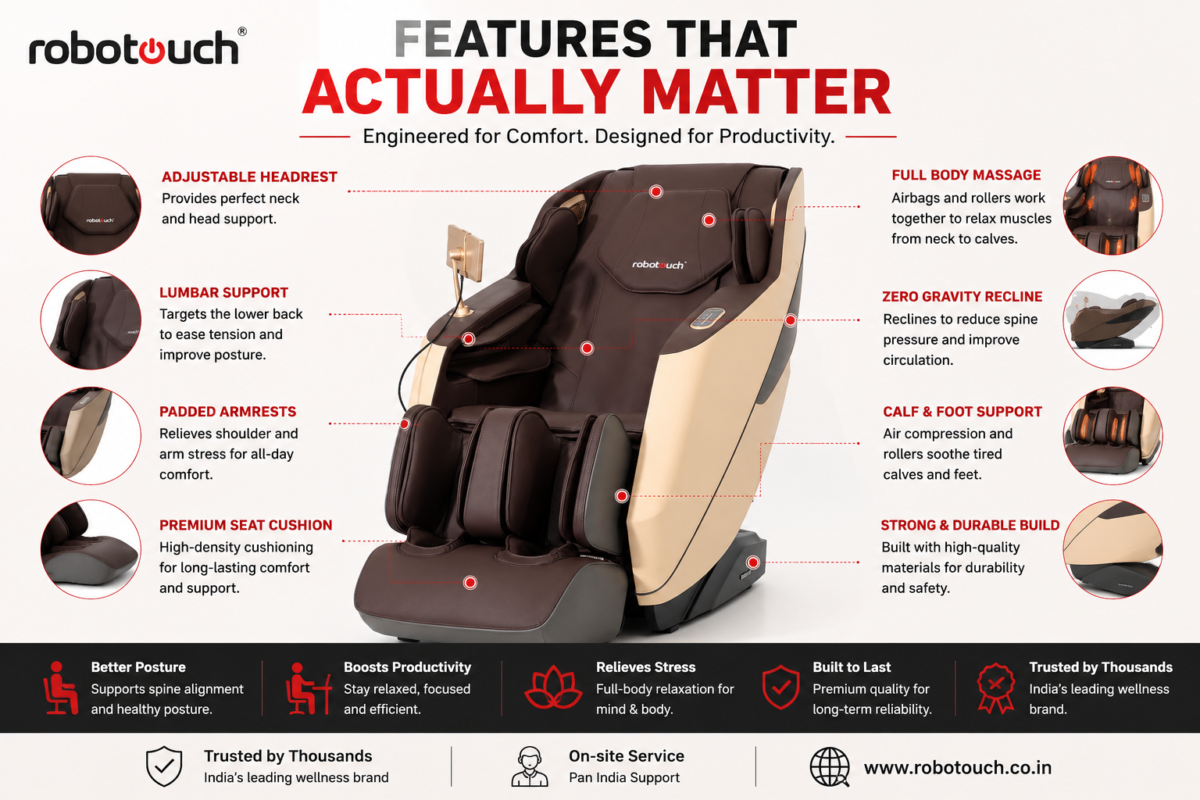
Others sound impressive but rarely make a difference in daily use.
Let’s separate the essentials from the marketing.
Ergonomic Support Comes First
Many people focus immediately on the massage feature.
Ironically, massage isn’t the most important part.
If the chair doesn’t support your spine properly, even the best massage function won’t solve the problem.
Start with ergonomics.
A chair should naturally support:
- Your lower back
- Your hips
- Your shoulders
- Your neck
- Your arms
Massage is a bonus—not a replacement for good design.
Good Cushioning Makes a Huge Difference
Have you ever noticed how some office chairs feel comfortable for the first thirty minutes but become uncomfortable after lunch?
That’s usually because of poor-quality foam.
High-density foam distributes body weight more evenly and keeps its shape for years.
This helps reduce pressure points around your hips and thighs during long working sessions.
Reclining Isn’t Just for Relaxing
Many people think reclining is only useful during breaks.
Actually, changing your sitting angle throughout the day helps reduce continuous pressure on your spine.
Even reclining slightly between meetings allows your muscles to recover.
Movement is healthy.
Remaining in exactly the same position for eight hours isn’t.
Mesh or Leather?
This is one of the most common questions buyers ask.
The answer depends on your priorities.
Mesh chairs are breathable and ideal for warmer climates. They allow air to circulate, helping you stay cooler during long work sessions.
PU leather chairs offer a premium executive appearance and are easier to clean. They’re a popular choice for corporate offices and home workspaces where style is just as important as comfort.
There’s no universal “best” option—only the one that suits your environment and personal preference.
Does the Massage Feature Really Help?
This is probably the biggest question people have before buying.
The short answer?
Yes—but it’s important to understand what it does.
A massage office chair isn’t designed to replace a professional massage therapist.
Instead, it provides gentle vibration massage that helps reduce muscle tension caused by prolonged sitting.
Think of it as a short refresh during your workday.
After spending three or four hours at your desk, even ten minutes of gentle massage can make your lower back feel less tight and help you return to work feeling more comfortable.
Many users say they don’t even use the massage function constantly.
Instead, they switch it on:
- During lunch breaks
- After long meetings
- While reading documents
- At the end of the workday
Small moments of relaxation often make the biggest difference.
Small Habits That Make Your Chair Even More Effective
Even the best chair can’t completely undo eight hours of sitting.
Your daily habits matter too.
Here are a few simple changes that can make a noticeable difference.
Stand Up Every Hour
You don’t need a long workout.
Just walking for two or three minutes helps improve circulation and reduces stiffness.
Stretch Your Shoulders
Roll your shoulders backwards several times during the day.
It takes less than thirty seconds but helps release built-up tension.
Keep Your Screen at Eye Level
Looking down at your laptop for hours places unnecessary strain on your neck.
Raise your monitor if needed.
Keep Your Feet Flat
Your feet should rest comfortably on the floor.
If they don’t, consider using a footrest.
Proper leg positioning supports healthier posture.
A Quick Buyer’s Checklist
Before placing your order, make sure your chair offers:
✔ Ergonomic lumbar support
✔ Adjustable seat height
✔ Reclining backrest
✔ Comfortable headrest
✔ Adjustable armrests
✔ High-density foam cushioning
✔ Quiet massage function
✔ Durable frame
✔ Smooth caster wheels
✔ Reliable warranty
If a chair checks most of these boxes, you’re far more likely to enjoy it for years to come.
Conclusion
The right office chair can make a bigger difference than you might expect. If you spend hours working at a desk, investing in a Massage Office Chair is an investment in your comfort, posture, and daily productivity. Instead of ending each day with back pain and fatigue, you can enjoy better support and a more comfortable work experience.
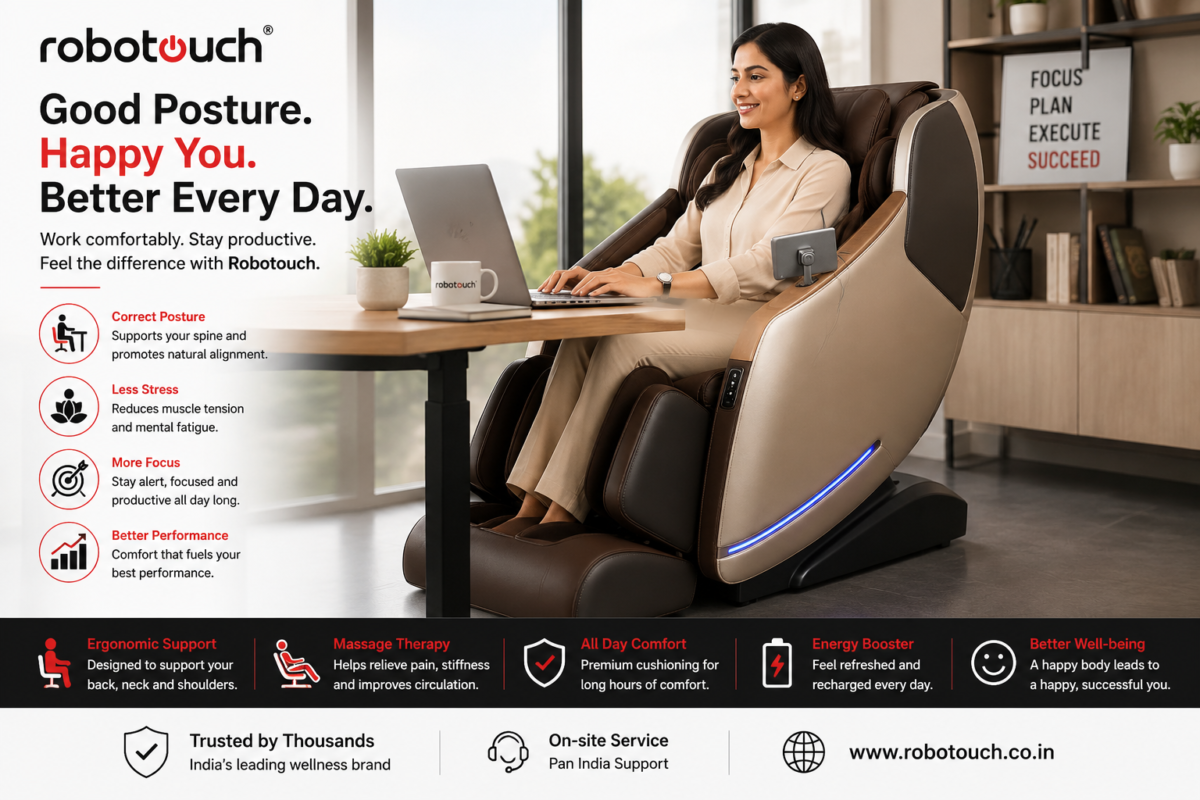
Before you buy, focus on what really matters—ergonomic design, adjustable support, build quality, and features that suit your daily routine. A well-designed chair will serve you for years, making every workday more comfortable.
At Robotouch, we offer massage office chairs designed to combine ergonomic support with advanced comfort, helping you work smarter and feel better every day.
Ready to upgrade your workspace? Explore the Robotouch collection and find the perfect chair for your office or home today.
Frequently Asked Questions (FAQs)
1. Is a massage office chair good for back pain?
A massage office chair can help reduce everyday back discomfort caused by long hours of sitting. Its ergonomic lumbar support and massage function help relax muscles and encourage better posture. However, it should not be considered a replacement for medical treatment if you have a serious back condition.
2. Can I use the massage function while working?
Yes. Most massage office chairs are designed with gentle vibration massage, allowing you to continue working, attending meetings, or reading without distraction. Many users turn it on during short breaks or while answering emails.
3. How long should I use the massage feature each day?
Using the massage function for 10–20 minutes at a time, two or three times a day, is usually enough to relieve muscle tension and improve comfort. Always follow the manufacturer’s recommendations.
4. Is a massage office chair suitable for daily use?
Absolutely. It’s designed for everyday use and is ideal for professionals, students, gamers, and anyone who spends long hours sitting at a desk.
5. Does a massage office chair consume a lot of electricity?
No. The massage motor uses very little electricity, similar to many small household electronic devices, making it energy-efficient for regular use.
6. What’s the difference between a massage office chair and a regular office chair?
A regular office chair provides basic seating, while a massage office chair combines ergonomic support with built-in massage functions to help reduce muscle fatigue, improve comfort, and support better posture during long working hours.
7. Can a massage office chair improve my posture?
Yes. While the massage function helps relax your muscles, features like lumbar support, adjustable armrests, headrests, and reclining positions encourage healthier sitting posture and reduce slouching.
8. Is a massage office chair worth the investment?
If you work at a desk for several hours every day, it’s a worthwhile investment. A good chair can improve comfort, reduce fatigue, and support your health, making long working hours much easier.
9. How do I choose the right massage office chair?
Look for ergonomic lumbar support, adjustable height, reclining function, comfortable cushioning, durable materials, and a reliable massage system. Also, consider your height, weight, and how many hours you sit each day.
10. How long does a quality massage office chair last?
A well-built massage office chair can last 5–10 years or more with proper care. Choosing a chair made with quality materials and following regular maintenance will help extend its lifespan.