
Blog
What Is a Zero Gravity Massage Chair and How Does It Work?

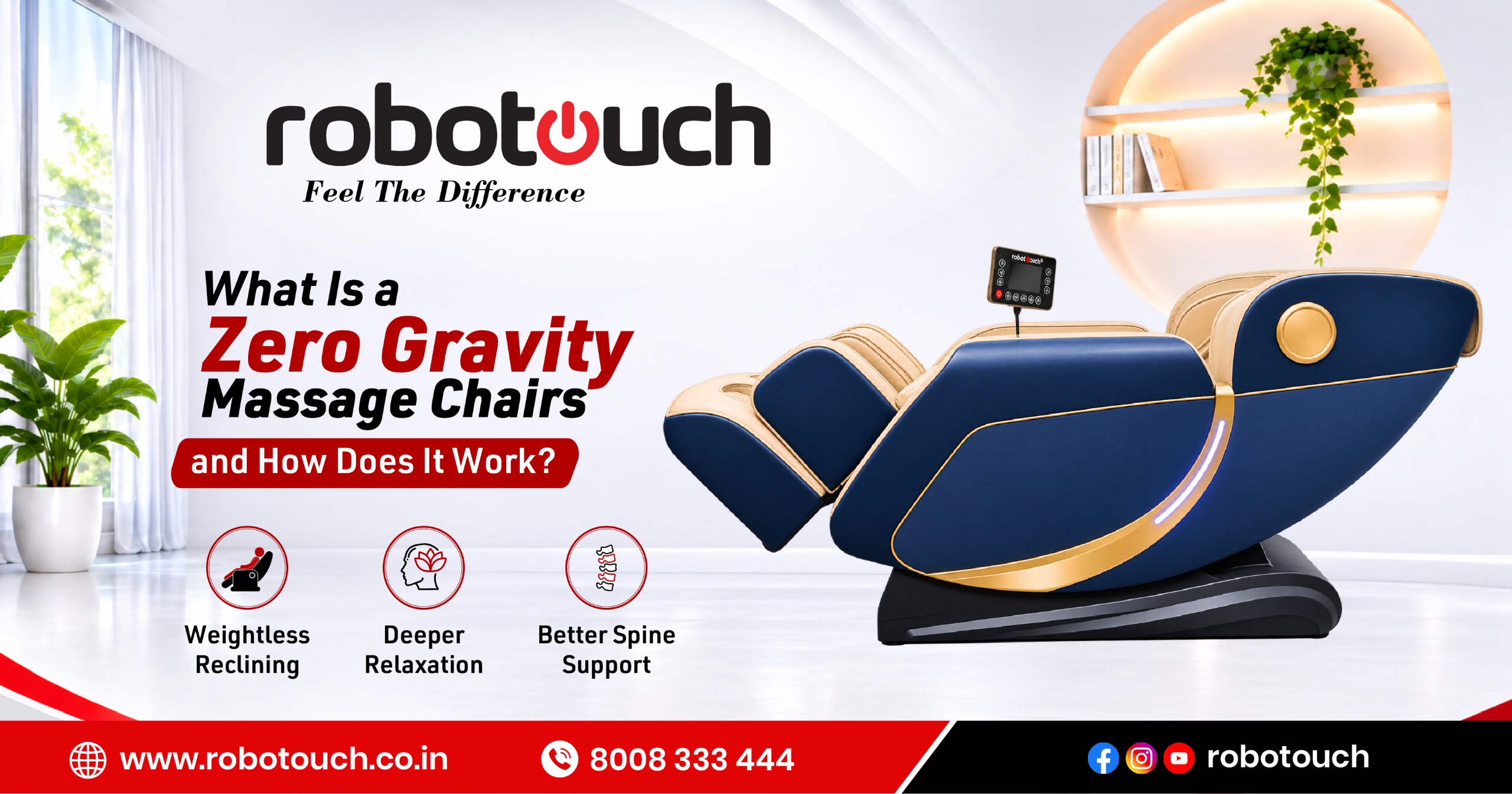
A zero gravity massage chair is a powered recliner that tilts your torso back and raises your legs into a supported position. The backrest, seat and legrest share the work of supporting your body as you recline. Depending on the chair, you can enjoy that position on its own or combine it with features such as back rollers, air compression and heat.
The name describes how the position can feel. Your body still weighs the same, and the chair still supports it against gravity. The change you feel comes from the angle of your body, the way your weight rests against the cushions and the support underneath your lower legs. For some people, that combination makes it easier to let their shoulders and legs settle than sitting upright does.
The most useful way to judge the feature is to try the posture before switching on the massage. Can you rest your head comfortably? Do your calves sit evenly in the legrest? Can you reach the controller without lifting a shoulder? Those small details tell you more about whether you will enjoy the chair than a dramatic product photograph or a recline figure on a spec sheet.
What does zero gravity mean in a massage chair?
On a product page, zero gravity usually refers to a recline position that sets the backrest and legrest at coordinated angles. You begin seated, lean back as the chair moves and finish with your lower legs supported higher than they were when you sat down. Depending on the design and your proportions, your feet may finish roughly level with your chest or higher. The position is often available through a dedicated button, although the exact controls vary.
Imagine sitting on the front edge of a sofa with your feet on the floor. The seat supports your hips and the floor supports your feet, while your back has little contact with the sofa. Now imagine sitting farther back with your upper body supported and your calves resting on an ottoman. The weight of your legs is carried by the ottoman, and more of your torso can rest on the back cushion. A powered zero gravity chair takes a related idea and coordinates the surfaces that hold you while you recline.
That change in support explains why the chair can feel different even before the massage starts. A backrest that supports you evenly may make the seated position feel less demanding. At the same time, the legrest has to fit you. If it presses behind the knees, leaves your heels unsupported or pushes the knees higher than you prefer, a less pronounced recline may feel better.
Where does the name come from?
NASA uses the term neutral body posture to describe the position the body tends to assume in microgravity. Its Human Integration Design Handbook discusses that posture as a practical consideration for spacecraft design. When astronauts are floating, the positions their hips, knees and other joints tend to settle into affect where controls, displays and working surfaces should go.
Consumer product language borrows the association with a relaxed, bent-joint posture. A massage chair approximates its own version of that shape using cushions, a frame and moving supports. The NASA reference explains the terminology. For a given chair, the manufacturer’s manual is the useful source for how its posture works and which controls move it.
Does a zero gravity chair always use the same angle?
The term appears across chairs with different frames, padding, seat heights and legrest designs. Even within one brand, one model may offer a single preset while another offers several stages or a manual position somewhere between them. The simplest comparison is to sit in both chairs and see where your body settles.
An advertised angle also needs a reference point. The angle between the seat and the backrest is different from the angle between the backrest and the floor. If the seat itself tilts during the recline, even comparing two seat-to-backrest angles tells only part of the story. A side profile of the chair occupied by a person is often easier to interpret than a number on a product card. Ask how the figure was measured if you want to use it to compare two models.
Is it the same as lying flat?
In a lie-flat setting the backrest approaches horizontal. A zero gravity setting typically holds a more bent posture, with the hips and knees flexed and the lower legs supported. A chair may offer both settings, and a picture taken from the side can help you identify the difference. One manufacturer’s control guide, for example, includes separate controls for a lie-flat position and its zero gravity preset.
Both positions can feel comfortable, depending on what suits your body and how you plan to use the chair. A person who likes to read may prefer a shallower backrest angle that keeps their eyes oriented towards a book. A person who wants to close their eyes for a few minutes may prefer a deeper recline. You should be able to rest comfortably at the angle you intend to use.
How does a zero gravity massage chair work?
A preset coordinates movement that you might otherwise have to adjust in steps. The controller issues commands to the chair’s powered recline system. The mechanism changes the orientation of the backrest and legrest, and some designs also tilt the seat or slide the upper assembly forward. Once the chair reaches the stored position, the movement stops. A massage program can then run in that position if the chair supports the combination.
The base and frame
The base provides the floor contact and anchors the moving structure. A powered chair can look as though the entire unit is shifting during the recline, particularly on a space-saving design, even though the floor-contact base stays in place. The upper assembly may travel relative to that base.
When shopping, look at where the chair’s outer shell is at the beginning and end of the movement. Some chairs have a shell that changes orientation with the seat. Others have a more stationary outer profile while the backrest moves inside it. This matters when placing the chair beside a wall, shelving or curtains. What you need is clearance for the full moving outline.
The backrest
The backrest supports your torso and also houses the back massage mechanism on many full-body chairs. Its contact with your body changes as it tilts. The more you lean into the cushion, the more distinctly you may notice a roller moving under the upholstery. This depends on the cushioning, your body position and the selected intensity.
You can test the difference by trying a gentle back massage at a shallow angle, then changing the angle while leaving the massage setting alone. Compare the feel in the upper back and lower back separately. A change that makes the lower-back contact more comfortable can make the upper-back contact feel too strong on the same chair. Independent control over angle and intensity makes it easier to find a combination you enjoy.
The seat
The seat supports the pelvis and influences whether you feel anchored as the chair tilts. A seat cushion that feels generous when upright can feel different once the backrest changes angle. You may notice that the seat edge supports the thighs more, or that your hips sink farther into the back of the chair.
Pay attention to the easiest position to settle into. If your body repeatedly slides down and you need to straighten yourself between massage movements, the fit is worth reconsidering. Check whether the showroom seat cover or removable insert matches the configuration supplied with the chair. A change in padding can alter both your seated height and your impression of the rollers.
The legrest and foot compartments
The legrest carries the calves and feet as they rise. Some designs support the legs on a broad padded surface. Full-body massage chairs may use two shaped channels with padding, air cells or rollers. The support should feel comfortable even before those features activate.
On an adjustable legrest, extension and elevation are different changes. Extension moves the lower section farther from the seat to accommodate leg length. Elevation lifts that section to change the recline posture. If your feet feel cramped at a good elevation, ask whether the legrest extends. If they sit correctly but the knee position feels too high, ask whether the legrest can be lowered independently.
On a chair with enclosed foot pockets, check the space around both heels and forefeet with your feet resting naturally. A pocket that fits when the unit is idle can feel tighter as the airbags fill. People of similar height can have quite different shoe sizes and calf widths, which is one reason two family members should try the chair themselves.
The motor and controller
The button on the remote, armrest or touchscreen tells the chair to move to the stored position. The control may respond to a short press, a long press or a menu selection depending on the model. Observe how the movement starts, how easily you can interrupt it and how you return to the sitting position. Those controls are worth learning before you explore massage programs.
Some chairs keep an easily reachable physical control near the arm. Others expect you to use a handheld remote or a mounted touchscreen. With the chair reclined, put your arms where they will naturally rest. Try reaching the recline control from there. Notice if you have to sit up or turn sharply. A control you can reach while settled is particularly useful when you want to soften the massage midway through a session.
The return to upright
Coming out of the chair is part of the experience. Depending on its programming, a chair may end the massage and stay reclined, or move towards an upright position when you finish or press a restore control. Try it in the shop and watch where your feet are as the footrest moves. Your chosen position should allow you to remain supported while the chair returns, and you should learn when the manual says it is appropriate to step out.
If two chairs are otherwise close, time an ordinary sequence on each one. Sit down, start the posture, adjust a setting, end the program and stand up once the chair is ready. Ease of use shows up in that entire sequence, especially if the chair will be used by several people who prefer different levels of recline.
What happens when the massage begins?
Zero gravity changes the posture. The massage comes from the hardware and the program you select. A chair can have an excellent recline and a simple massage system, or many massage options and a posture that feels less natural for you. Compare the experience of each feature in its own right, then try them together.
Back rollers and the massage track
Back rollers press and move behind the upholstery. The mechanism may travel on a track that guides it along part of your back and, in some designs, farther under the seat. The track shapes the route. The controller and mechanism determine which movements the rollers make and where they spend time during a program.
An S-track is commonly described in terms of following the curves of the back. An L-track generally continues beneath the seat area. An SL-track designation combines a curved back section with a longer route towards the seat, with the exact coverage depending on the chair. To compare tracks in practice, see where the roller actually reaches on your body. On the same model, a tall user and a shorter user may feel contact in different places. Recline can make the rollers feel more noticeable by changing how you rest against the back cushion. If you enjoy strong contact at the lower back, test whether the same recline is comfortable at the shoulders. If you prefer lighter contact, try the lowest suitable setting and a gentler program. A chair that allows separate roller-width, speed or depth adjustments gives you more ways to change the feel, subject to what the particular mode allows.
What 2D, 3D and 4D mean when you recline
A 2D mechanism is generally described by movement along and across the back. A 3D mechanism adds adjustable depth, letting the massage heads project toward the body by different amounts. Manufacturers often use 4D to describe additional variation in movement or speed, but the details vary among brands.
Ask the demonstrator to make one adjustment at a time. First keep the recline the same and change depth. Then keep depth the same and change the recline. That gives you a practical distinction between a massage setting and a posture setting. It is easy to attribute any change in pressure to a better roller mechanism when a different recline was responsible for much of the difference.
Air compression
Air compression uses inflatable cells in the upholstery to create a squeeze-and-release sensation. Depending on the model, there may be cells at the shoulders, arms, hips, calves or feet. Some programs cycle between areas so the sensation shifts during a session. Others let you select which regions to use.
Recline affects how your limbs sit against these cells. If your calves are evenly seated in the channels, the squeeze may feel more even. If one leg is angled out, it may receive different contact from the other. On a showroom demo, test low pressure first and ask which regions can be adjusted or turned off. That information can be more useful than the total airbag count.
Foot rollers and calf massage
Foot rollers add moving contact around the soles. Calf massage may come from airbags or a separate kneading mechanism, depending on the product. A raised legrest can make the feet sit more deeply into the compartment, which changes how you feel the rollers. A comfortable leg position is the starting point for judging these features.
It helps to compare each feature separately. Try the foot rollers with calf compression low or off, then try calf compression with the rollers off if the controls allow it. If the only test you do uses both at a strong setting, you may have trouble deciding which felt good and which you would rather soften.
Heat
A heating feature adds warmth in one or more zones identified by the product manual. It can complement a reclined session, especially when you enjoy the feel of warmth through the upholstery. The warmest part of the chair may be at the lower back, the calves or another specific region depending on the design.
If you are comparing heating features in a showroom, first ask where they are located and whether they can run independently of the massage program. A quick demo may be too short for the warmth to feel the same as it would over a complete session. Follow the model’s instructions for use, including any limitations on heat.
Body detection and shoulder adjustment
Some chairs start a program by moving the roller mechanism through an assessment cycle. This can help set a reference for where the shoulders sit. Other models ask you to select a shoulder level or allow fine adjustment after a scan. The selection matters because a neck-and-shoulder movement feels quite different if it lands too high or too low.
Sit as instructed while the chair sets the reference point. Then check where the first passes actually contact your back. If the result feels off, try the manual adjustment before drawing conclusions about the program. On a chair shared by a family, ask whether the machine repeats the scan for each new session. That affects how easily a shorter person can use the chair after a taller user.
Automatic programs and manual modes
An automatic program combines a sequence of techniques and may change speed, intensity, active zones or posture over time. A manual mode usually lets you choose a technique or target area more directly. Both can be useful. A program is convenient when you like the entire sequence, while manual control helps when you know you want light compression and a narrow back massage range.
Program names are a starting point for exploration. A mode called Relax on one model may feel stronger or use different movements than a similarly named mode on another. In a trial, ask for a brief description of what happens midway through the program. A session that starts gently might later use stronger tapping or change the leg angle. That matters if the chair will be used as part of a quiet evening routine.
Zero gravity vs Zero Space
Zero gravity describes the posture you sit in. Zero Space or space-saving recline describes how the chair moves relative to the wall behind it. These features solve different buying questions. One is about body position. The other is about placement in your home.
A space-saving mechanism may move the seat and backrest assembly forward as it reclines. The forward movement helps reduce how much the backrest projects behind the base. The footrest still needs room in front, especially if it extends while raised. Side space also matters if you need to stand next to the chair to sit down or reach the controller.
When you see a clearance figure, identify the starting point. Is it measured from the base, the rear of the shell or the back of the chair in its upright position? Check the documentation for the exact model and make sure the distance applies to the deepest position you intend to use. For an example of why both measurements matter, the Human Touch Super Novo manual specifies front and rear clearance independently.
A practical room layout example
Suppose you want to place the chair in a living room with its back near a wall and a coffee table in front. First mark the base position with removable tape. Then use the manufacturer’s drawing to mark the furthest forward point of the legrest. Finally, check how you will walk through the room with the chair reclined. The chair might clear the wall and the table but still cut off the path to a balcony door.
Try a second layout with the chair offset or at an angle. A diagonal placement can expose a corner of the footrest that was hidden on a flat floor plan. Move a lightweight chair or a cardboard template into the marked area so you can see how the space feels at full scale. When the placement works, note where the plug will go and leave the cable routed as the installation instructions specify.
How should a zero gravity massage chair feel?
A good fit feels steady as the chair moves and evenly supported once it stops. Your head has a comfortable resting point, your shoulders can settle, your arms reach the supports without strain and your feet sit in the legrest with room to relax. If you need to keep changing where you sit to reach the controls or escape a pressure point, investigate those details before buying.
Try the chair in the clothes you would normally wear for a session. A thick coat or heavily padded garment can change how the rollers feel. Ask about any model-specific rules on socks, footwear or removable accessories. In a showroom, it is easy to judge a chair while wearing something quite different from what you would wear at home.
Start with your head and neck
Look at where your head rests when the chair has finished moving. Is your chin slightly lifted, comfortably neutral or pushed forward by the pad? Notice whether you can close your eyes without feeling that you need to hold your head in place. If the head pillow is adjustable, ask how much it can move and whether moving it changes the neck roller contact.
A person with a longer torso can sit higher in the same chair even if they have a similar standing height to another shopper. Use the fit range as a first filter and confirm the headrest position while seated. If your most comfortable head position requires sliding your hips forward, see whether the same adjustment puts your lower back or legs in an awkward position.
Let the shoulders settle before checking roller alignment
Sit all the way back, lower your shoulders and let your arms rest. If the seat or shoulder panels encourage you to fold your shoulders inwards, it may be difficult to enjoy a long session. Conversely, an open shoulder area may feel comfortable but provide little contact if you specifically want shoulder air compression.
Shoulder width is one of the dimensions that gets little attention in retail specifications. Ask to try the chair with compression off and then at a mild level. If you immediately feel squeezed even at the low setting, check for independent shoulder controls or a more generous fit on another model.
Check the seat edge and knee bend
A seat edge should feel as though it supports the thighs without creating one sharp pressure point behind the knees. If the lower legs are elevated, see where the bend of your knee lies in relation to the chair’s seat and legrest junction. That contact changes as the chair moves from upright to the deepest position.
A shorter user may need the legrest to retract enough to keep the feet supported. A taller user might need the legrest to extend so the knees can settle naturally. To compare both ends of the range, try the chair first with the foot massage switched off, then try it again with the program you expect to use.
Test your foot position with the system idle
Place both feet into the pockets or rests as directed. Check whether your heels are supported with your ankles at an easy angle. Notice any pressure from the sides or the front of the boot. If your left and right feet naturally rest differently, confirm you can use the chair comfortably without holding them in a forced position.
After that, test a light foot massage. Some people enjoy kneading at the ball of the foot and prefer softer contact through the arch. Some prefer calf compression with the sole rollers off. If you anticipate choosing one region regularly, verify that it can be used on its own before treating the foot-and-calf system as a deciding feature.
Feel how your arms rest
Arm channels can support the forearms and may contain airbags. Try to rest your hands without pulling your shoulders forward. If you are shorter, you may have to reach to sit in the intended part of the arm channel. If you are taller, test whether your elbows can sit naturally without pinching against the back of the armrest.
A common showroom mistake is to hold the remote with one hand through the entire demonstration. That makes it harder to tell whether the armrests fit evenly. Find the dock or holder, leave the remote there for a moment and try using the chair as you would at home.
See what changes during an entire recline cycle
As the chair starts moving, watch how the tilt affects your clothing, arms and legs. Notice what happens near the final few degrees. A slow, gradual motion may feel reassuring. An unexpected change in the legrest position can be distracting if you were preparing to read or looking at a screen. The demonstration should include both the movement down and the movement back to sitting.
Ask whether the start and return motions differ across programs. One routine may begin with a body detection sequence in a particular posture, while another may move as soon as you press Start. The useful task is to test the mode you are likely to use at home, using the same sequence from beginning to end.
How to compare single and multiple recline stages
A single-stage system stores one predefined posture. You press a button and the chair moves there. If you like that position and can easily get in and out, one stage may be all you use. A multistage system can offer a shallower point and a deeper point without requiring you to adjust the back and leg sections individually.
The names for the stages vary. A stage marked 1 on one chair may be a moderate recline and on another may be much deeper. Use the labels only within the model you are testing. If a chair also offers manual angle adjustment, check how a manual change affects the preset display and whether the chair remembers your choice for the next session.
Who might appreciate a shallow stage?
A shallow stage suits a user who wants leg support and a little extra back contact while keeping an easy view of the room. For example, someone who listens to a podcast while the family watches television may want to remain partly upright and able to interact. A shallower position may also be easier for someone who dislikes the feeling of the head moving too far back.
Evaluate whether the chair can support the lower legs well at this setting. A shallower back angle with a legrest that sits too low may leave the legs feeling less supported than expected. If the legrest can move separately, see whether you can raise it without forcing the backrest deeper.
When does manual positioning matter more?
Manual positioning is useful if your preferred combination falls between presets, or if you want a different back-to-leg relationship altogether. Someone with a long lower leg might prefer the foot section to extend further without increasing leg elevation. Someone using the chair in a social room might want to change the angle during conversation while maintaining a massage setting.
Try adjusting the backrest and legrest separately. A product can offer multiple presets but tie both parts together during those positions. Check whether a manual adjustment interrupts the massage or simply changes the angle while it runs. If a particular automated program limits the movement, try a simpler manual massage setting to see what flexibility the chair gives you.
How should a household choose?
Write down one preferred posture for each person. Include the massage mode they want, how strong they like it and whether they need to reach any special control. Then compare the shortest path to reach each setting. On some models a quick preset and one intensity change will be enough. On others you may need to repeat a series of menu selections.
A household that rarely shares the chair may place less value on profiles or saved settings. A household in which several people use it back to back may value a simple return to default or a clear way to recall a posture. Check what is saved. A favourite programme shortcut may remember the programme but leave the recline, heating or intensity to be selected manually.
A showroom demonstration you can run yourself
When you walk into a showroom, start with the same brief routine on each model. A demonstration designed to show every function can make two chairs difficult to compare, because the sales representative may use a different technique or intensity for each one. A repeatable routine gives you a fairer basis for choosing.
Before sitting down
Ask for the exact name and revision of the demo unit. Take note of whether its upholstery, padding or options match the version being quoted. Then ask the team to show you the zero gravity control, the intensity adjustment and the control that returns the chair upright. Find out whether the demo starts with a saved preference from the previous shopper.
For a shared purchase, let each regular user test the chair independently. If time is limited, give each person a few minutes with both the recline and the massage controls. Compare impressions afterwards. One person may think a feature was easy to use because the demonstrator made the adjustment for them. A hands-on test reveals whether it is still easy when sitting alone.
Try the recline before the rollers
Sit all the way back in the starting position and place your legs and arms as instructed. Activate the preset. Pay attention to which section moves first, whether the motion feels smooth to you and where you finish. Then stop and assess the headrest, hips and leg support in that position.
Change one angle if manual controls are available. Raise the backrest slightly or lower the footrest a little and see if the position improves. If one small adjustment substantially changes the fit, make sure you can reproduce it quickly. A posture you can set easily is more likely to become part of your home routine.
Compare the same technique at two angles
Try a familiar technique such as gentle kneading on the same back area at a shallow angle, followed by the preferred recline. Use the same speed and intensity setting where possible. Focus on what changes in contact, whether the sensation feels centred and whether you can rest through the entire pass of the rollers.
If the trial chair cannot hold the chosen output while the posture changes, ask whether another manual mode allows the comparison. The goal is to discover combinations you like. A large number of programmes is useful only to the extent that the settings cover how you intend to use the chair.
Test both the beginning and end of an automatic programme
Select one programme you would actually use. Let it advance far enough to show whether its movement and intensity vary. Short demos can make two programmes sound similar even when they feel noticeably different after the opening sequence. If you mostly want a quiet, gentle experience, see whether the programme introduces tapping or a leg movement that interrupts it.
Then end the session using the controls yourself. Identify any difference between pausing, stopping and restoring upright. Ask what the manual recommends if the machine pauses unexpectedly or if power drops while reclined. Get the exact procedure for that model, particularly if interruptions are common in the building where you plan to install it.
Write down impressions before looking at the price
While the experience is fresh, record which angle you tried and how the chair fit. Use observations you can compare later. “The left heel did not settle into the foot pocket” and “I could adjust leg height without asking for help” are more useful than “It felt premium.” The second day, those notes will help you remember what was different.
An example scorecard can use five questions. Was the recline comfortable before the massage? Could both feet sit naturally? Was the gentlest roller setting suitable? Could the controls be reached while reclined? Was returning to upright straightforward? Add a note about anything that made you stop the demonstration. A single fit problem can matter more than a long list of features.
Buying a zero gravity massage chair online
Shopping online lets you compare layouts, specifications, offers and service details without travelling, but there are some things a photograph cannot tell you. In particular, the roller feel and legrest fit are personal. If you can do a showroom trial for your shortlisted models, it will make the online comparison easier. If that is impractical, seek videos and confirmed measurements of the same model.
When you mainly want a reclining seat
Try ordinary recliners as well as massage chairs if the feature that draws you in is leg support. A conventional powered recliner can offer a comfortable seated position without a mechanism under the back cushion. It may also offer a different shape of seat, a wider choice of upholstery or simpler entry, depending on the model.
When testing integrated massage, pay attention to the backrest with the rollers parked. A chair that is excellent during a programme can feel quite different as a place to sit for a longer period. Ask whether the manual allows the chair to be used as a seat or recliner when the massage is off and whether the controls allow the posture to be maintained. Make sure the furniture suits the way you will actually use it.
When you want several massage regions in one seat
An integrated chair saves the effort of positioning several separate devices. The back, arm and leg features can be arranged to run together in a single routine. It also allows the manufacturer to design the supports and massage zones to work within one reclining structure.
The practical test is whether the integrated design reaches each region in the way you like. If the shoulder area fits you but the feet feel cramped, decide whether the foot feature was part of the reason you wanted a full-body chair. A chair can be a strong choice for its back massage even when you rarely use one of its other zones. Test the option to switch that zone off before buying if you intend to do so.
When two buyers want very different things
It is common to shop with someone who has a different preference about depth or pressure. Make a list of the two requirements each person uses often enough to justify the purchase. A shared decision can start with those four requirements before considering extras. You may find one model meets all four through separate controls, even when it offers a shorter list of automatic routines.
In a crowded showroom, each person may test the same programme at the same angle simply to save time. Do a second short comparison where each person chooses their own setup. That is closer to how you will use the chair at home. If both enjoy a different setup, check what the next user will need to reset when they sit down.
A final shortlist that is easy to compare
When you narrow the list to two or three chairs, write down what you verified in person and what the seller confirmed in writing. Keep unanswered questions visible. The point of a shortlist is to see where the choice still depends on a fact such as delivery clearance or the ability to control one massage region independently.
Record actual observations
For each chair, record the exact preset you tried and where you felt well supported. Add a note about any pressure point. Instead of assigning a general rating for “fit,” note which user had the issue and when it appeared. Problems that occur only at the deepest recline may matter little to a user who loves the shallower preset. The same issue could be decisive for a buyer focused on deeper recline.
Describe the control sequence you used. For example, note whether you started from the remote or screen and whether you were able to stop or restore without assistance. Ask your other household members to write separately so their impressions are independent. Compare answers together after the demonstration.
Separate purchase price from support and access
Put the full delivered cost on one line for each model. On the next lines, record installation, service availability and any building-access arrangements that affect the order. This keeps a promotional price from hiding a difference in what is actually supplied. Where the chair is a gift, check the terms for the recipient’s actual address.
Confirm what happens if delivery cannot proceed as planned. Ask who will assess the route, whether there is a charge for another attempt and what happens if the item cannot reach the room. Get these details from the seller responsible for your order. The information can vary even when two sellers list the same chair.
Make one final check before ordering
Look at the application you described when you started. If you wanted a short, gentle evening massage, can you reach that setup easily? If you wanted the chair for shared family use, did the other regular users actually try it? If you wanted a compact layout, did you check the forward travel as well as rear clearance?
A second trial can be useful if your shortlist changed after the first visit. Spend it checking the remaining decision instead of opening every feature again. A product you tried once while upright may feel different in the exact zero-gravity position you intend to use. A targeted follow-up visit takes less time and answers more.
Ask for the settings used in your demonstration
If you buy the chair you tried, ask the showroom to write down the settings that made the demonstration comfortable. Include the programme, preset, roller strength and any position correction made after the body scan. Also note whether heat, foot rollers and air compression were active. A demonstration may feel quite different from the default programme your chair uses when you first turn it on.
Use the note during installation to recreate the conditions you enjoyed. The installer can show you where to find any control you missed in the showroom. If the posture feels different at home, compare the head pillow position and legrest extension before changing several settings together. Repeating the original sequence gives you a clearer point of comparison.
Keep the note somewhere accessible to other users, with each person’s settings recorded on a separate line. This is particularly helpful if the controller remembers the last setting or if the chair has several automatic programmes with similar names. Your first week of use is a good time to update the note with the shorter sequence you discover or the lower intensity you prefer at home.
Conclusion
A zero gravity massage chair tilts your torso back and raises and supports your lower legs. Its main advantage is the chance to find a comfortable posture before adding the massage you prefer. The feel comes from the whole chair: the shape of the seat, the fit of the footrest, the angle of the backrest and the settings you can reach once you have settled in.
Test those details in the order you will use them. Start with recline, try a gentle massage in the same position and practise returning upright. Measure both the operating footprint and the delivery route before ordering. If the chair is for more than one person, have each regular user try it. When the posture, controls and room fit all work in practice, you have a sound basis for your decision.
To compare positions and massage features in person, ask RoboTouch for a demo of the models on your shortlist.
Frequently asked questions
Is my body weight reduced in a zero gravity massage chair?
Your body weighs the same. Reclining changes which parts of the chair carry and distribute that weight. Upright, some weight is carried through your feet and more of your torso is above your hips. Reclined, a greater portion of your torso can rest on the backrest, and your lower legs are supported by the legrest. The feeling of lightness comes from that arrangement.
Are the legs always elevated above the heart?
The final posture depends on the chair, the preset and the person using it. A deeper position may lift the feet substantially. A shallower position can still provide useful leg support even when the feet sit lower. Try the chair in side profile if the leg height matters to you, and compare where your calves, heels, knees and chest actually end up.
Can a manual recline setting feel similar to the factory preset?
Yes. On chairs that let you move the back and legs independently, you may find a manual setting with a similar supported feel. In fact, you may prefer a small difference in knee bend or backrest position. Check how easily the chair can reproduce that combination. A preset has the practical advantage of taking you to the same position each time it is selected.
Does zero gravity mean the massage is stronger?
The zero gravity button changes your posture. How strongly you feel the rollers can change because you are leaning into the upholstery differently. Roller depth, speed, technique and padding also affect the sensation. If you want to judge the effect of recline, leave the massage settings unchanged and move between two supported angles.
Can I use zero gravity without massage?
Some chairs allow a recline position to be used independently. Others tie the position to a session or restore the chair after a programmed period. Check the actual model’s manual and try it with the programme stopped in the showroom. If you want to use it mainly as a resting seat, ask how long the position can remain active and what happens when you end it.
Can I keep the massage on while changing the angle?
It depends on the controls and the programme. Some combinations are designed to work together. Other programmes set the angle themselves or restrict manual changes while a technique is running. Ask the team to demonstrate this with the programme you are buying the chair to use. A manual mode may offer additional flexibility on the same model.
Do I need two zero gravity stages?
One preset is enough if it gives you the position you enjoy. Additional stages give you quick alternatives, which can be useful if one person prefers a moderate position and another likes a deeper recline. Manual adjustment can be another way to get that flexibility. Count the positions that feel useful to you rather than assuming every available stage will become part of your routine.
Do I need a 3D massage chair to enjoy zero gravity?
The recline and the roller mechanism are separate features. A simpler roller system can be comfortable at the angle you like. A 3D mechanism may be useful if you want to adjust how prominently the rollers project towards your back. Try a low setting at your preferred angle first. That shows whether the chair has the range you need for your normal sessions.
Will my preferred recline work for everyone in the household?
Different leg lengths, shoulder widths and torso proportions affect contact with the same cushions and massage zones. Each user should try the chair within the manufacturer’s guidance. If one person needs a different legrest position or shoulder reference, check how quickly the controls can be adjusted. A household fit check is more informative than averaging everyone’s standing height.
How do I choose a chair for an older parent?
Invite the parent to try it if possible. Have them test entry, head and leg support, controller reach and returning to upright before trying a programme. Check whether they prefer a physical button or a display and what posture they can get into and out of comfortably. If they have questions related to their health or mobility, review the manual together and ask their healthcare professional about the intended use.
Will my chair fit close to the wall?
Use the manual’s model-specific rear clearance and measure the complete forward travel too. Space-saving recline can reduce the rear gap by moving part of the chair forward. The footrest and your usual route through the room still need space. Check the actual outline with the legrest fully extended if the people using the chair need that setting.
Can a chair be too long even when the wall clearance is small?
Yes. Rear clearance measures the space needed at one side of the chair. Overall depth includes the chair itself and how far the footrest projects in use. A compact rear gap can help in a deep room but offers less help in a narrow passage with a cabinet opposite. Measure the shape of your available floor space before comparing labels.
What happens when a session ends?
Depending on the chair and mode, massage may end while the posture stays the same, or the chair may move as part of the programmed sequence. The controller may also have a separate restore command. Try ending a session during your demonstration, because this is a sequence you will use every time. Follow the manual on when to step out.
What happens if power goes out while the chair is reclined?
Check the procedure for the exact model. Before buying, ask the installer to show you the relevant manual section and explain the next step for your home’s power setup. Avoid attempting to force the powered sections into position. Ask how the chair behaves when power returns, especially if interruptions are common where you live.
Does a large programme count make a chair easier to use?
A wider choice can be useful when the programmes cover preferences you and your household actually have. Ease of use depends on how easily you can find and adjust a routine you enjoy. Compare the menus by starting a real session yourself. One good sequence that uses the right posture and intensity may matter more in daily use than several routines you seldom choose.
How long should I use a zero gravity massage chair?
The model’s manual gives the relevant limits and instructions. Automatic programme duration can vary, and equipment may have a maximum continuous operating period or a required rest between sessions. Use the guidance for your model and stop a session if you feel uncomfortable. If you are just getting to know the chair, select a gentle setting within the recommended range.